Apple’s Latest Siri AI Is Set to Be More Personalized
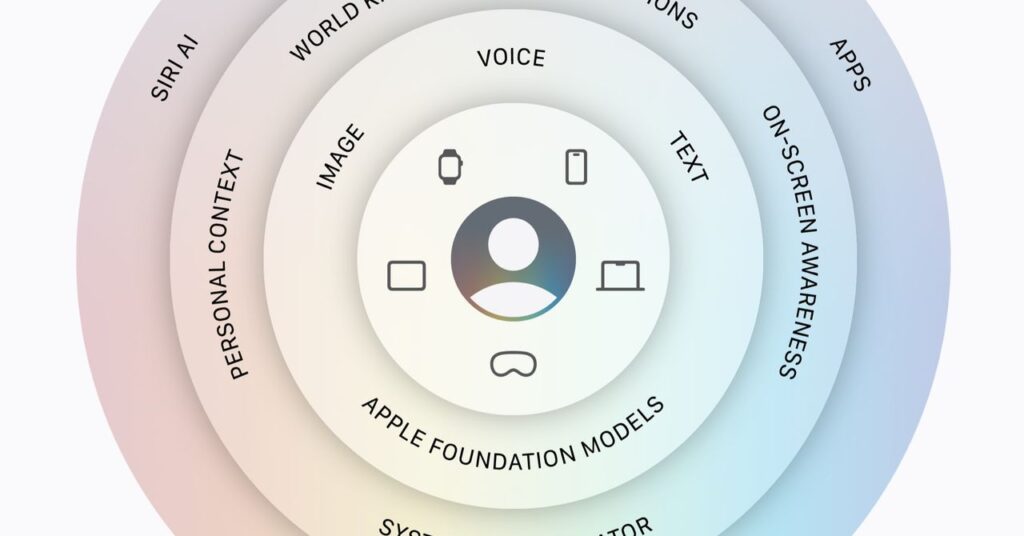
Apple’s significant redesign of Siri, revealed on Monday at WWDC 2026, seeks to enhance the smartphone voice assistant’s usefulness, aligning it more closely with iPhone users’ personal data and becoming more action-oriented. A key element of this Siri overhaul is a collaboration with Google Gemini to enhance the AI tool’s foundational model as part of Apple Intelligence.
Following prolonged delays, Apple is advancing with a dynamic rebranding of Siri, transforming the voice assistant’s presence on iPhones and introducing a new access point: a stand-alone Siri app.

The all-new dedicated Siri app.Courtesy of Apple
This modernization is anticipated to be available to consumers later this year. Users will soon be able to engage in chatbot-like interactions with Siri, as well as access previous conversations, akin to the experience offered by ChatGPT. Siri will also leverage personal information stored on your device—including current screen content—when responding to queries.
Prior to this announcement, Siri had largely remained unchanged while the generative AI landscape advanced rapidly around it. Competing voice assistants such as Google’s Gemini, Anthropic’s Claude, and OpenAI’s ChatGPT quickly surpassed Apple’s capabilities.
“In recent years, as large language models have evolved, some of these assistants have become extraordinarily capable—while Siri has remained quite basic and limited in its functions,” notes Avi Greengart, lead analyst and president of Techsponential, a market advisory firm.
This revamped Siri can accomplish significantly more. For example, if you need assistance drafting an email, the rejuvenated Siri can pull relevant details from your Apple devices, such as information saved in your Notes app, to craft a suitable response. It can even generate draft messages for your group chats. Siri’s new approach mirrors the strategy adopted by other leading assistants in 2026: to enhance its utility by utilizing more personal information.
Oral History
In 2011, when Apple integrated Siri into the iPhone 4s, it marked a pivotal moment for smartphone voice assistants. This early version of Siri could check the weather, schedule appointments, and set timers. The launch video featuring Zooey Deschanel, where she casually inquires about the weather while in her pajamas, is etched in my memory. The voice assistant transformed from an app that needed to be downloaded into a built-in feature of the device.
As time passed, competing voice assistants began to catch up with Apple’s Siri, triggering widespread discussions in media outlets like this one about whether Apple was losing its competitive edge.

Rajat Sharma
https://in.linkedin.com/in/rajat-mediaHelping D2C Brands Scale with AI-Powered Marketing & Automation 🚀 | $15M+ in Client Revenue | Meta Ads Expert | D2C Performance Marketing Consultant