I Recorded Myself Doing Chores for a Week to Make Money. Who’s the Real Robot?
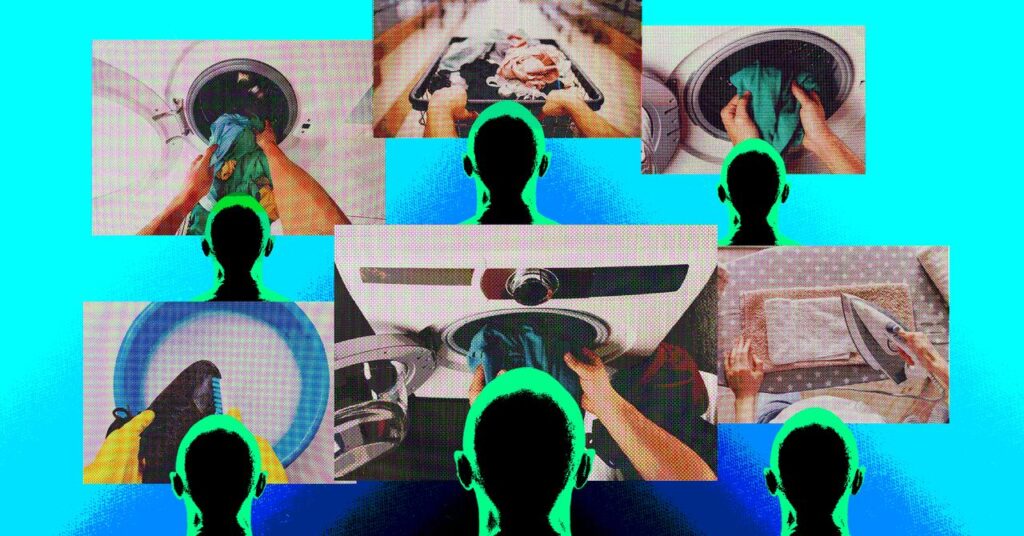
I am no longer just a human being. I’ve transformed into a channel of reality, a bearer of messages. With a knife in hand, I chop an organic cucumber, leaning in so that the iPhone mounted on my forehead captures all ten fingers. The slices go into a salad bowl as I finish recording. Somewhere, a baby robot gains a bit more intelligence.
This was my life for an entire week last month as I gathered data from my apartment, instructing humanoids on how to clean dishes, fold laundry, and pour drinks, among other mundane tasks. For robots to integrate into our homes and assist us, they must develop fine motor skills. I took pride in performing my household chores (I typically don’t contribute to large datasets when putting away my jockstraps). Plus, I was happy to earn some cash.
First-person videos, filmed with cameras attached to a person’s head or chest, are becoming increasingly vital as more companies strive to create bots and enhance their AI systems. While the internet is filled with videos that can be scraped, highly specialized clips—like countless close-ups of hands pouring water into a glass without spilling—are crucial for fine-tuning machines to perform real-world tasks. Known as egocentric data in the industry, this type of recording is in such high demand that some investors predict leading companies will acquire hundreds of millions of hours from third-party suppliers in the coming years.
“I want every person on the planet to be recording themselves doing the dishes,” says Avi Patel, the 22-year-old founder of the data collection marketplace Kled. “That’s going to create a robot so you never have to do the dishes again.” Egocentric data collection is already expanding in countries like India, where self-employed individuals typically earn around $125 a month on average, and these first-person video gigs can offer similar compensation.
As interest grows, more data collection companies are aiming to expand in the U.S., such as DoorDash’s standalone Tasks app launched earlier this year. Soon, many gig workers in the U.S. may start delivering reality alongside their usual lukewarm takeout.
Fortunately, I already owned a smartphone head mount from testing DoorDash’s Tasks app. My impression back then was that custom video data represented a dystopian future for gig work, but I wanted to dive deeper into this emerging sector. Since Tasks isn’t available in California, where I reside, I registered for three other platforms: Kled, Luel, and Waffle Video.
The earnings were minimal. I effectively trained the robots for a pittance and didn’t make a significant impact on the $2,500-a-month San Francisco rent I share with my partner. However, the gigs did come with one unexpected benefit: My apartment has never been cleaner.
Kled’s breakout moment occurred when Patel shared a video on X earlier this year, featuring a glimpse of the company’s vast video data archive. The clip quickly amassed over 4 million views, leading data buyers to flood Patel’s phone with inquiries. “Every major foundational model and lab reached out to me asking for data,” he explains.
Robot training data is just a fraction of what Kled collects from its over 300,000 users—mainly, the startup compensates individuals for uploading their complete camera rolls as AI training data. Patel has observed early adopters embracing gig work in Malaysia, and there’s a “special tasks” section designed to encourage video submissions. Users can select from a list of chores they wish to film and capture content directly through the app. Specific hourly rates aren’t provided; each task is labeled as low, medium, or high paying, without detailing a specific range. (The company mentions that an update will roll out in about a month, which will include rates for many, though not all, tasks.)

Rajat Sharma
https://in.linkedin.com/in/rajat-mediaHelping D2C Brands Scale with AI-Powered Marketing & Automation 🚀 | $15M+ in Client Revenue | Meta Ads Expert | D2C Performance Marketing Consultant