Insights from Pope Leo XIV’s First Encyclical on the Influence of AI
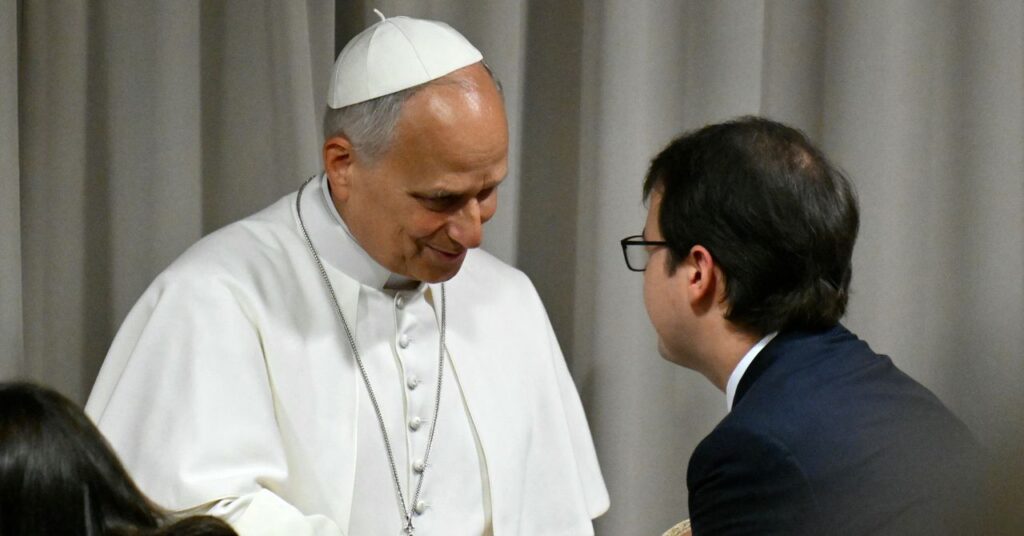
An algorithm determines what we observe, another curates what we read, and additional ones play roles in the mechanisms governing work, information, and communal decisions. In the encyclical Magnifica Humanitas, the first signed by Pope Leo XIV and released on May 25, artificial intelligence is recognized not merely as another advancement; it is woven into the unseen framework of our modern lives.
However, the document is not solely a technological examination. Pope Leo XIV situates the topic of AI within the tradition of the social teaching of the Catholic Church and directly references—while updating it—the Rerum Novarum of Pope Leo XIII (released on May 15, 1891), marking its 135th anniversary. That encyclical tackled labor issues at the peak of the industrial revolution in the late 19th century.
Whereas the “res novae” of that era included factories, labor, and industrial capitalism, contemporary challenges revolve around digital platforms, algorithms, data, and automated systems that are redefining power dynamics, the economy, and social interactions. Consequently, the encyclical does not present itself as merely a technical document regarding innovation, but as an interpretation of digital change through the lens of human dignity and the common good. Technology, the Pope asserts, is not inherently evil; rather, it is part of human history and creativity. Yet, the current scenario is different in terms of both scale and depth: “Never has humanity held such power over itself,” the text notes, describing technologies that increasingly influence decision-making, collective thought, and social existence.
From this perspective, Robert Francis Prevost initiates his discussion: focusing on the escalating concentration of power through systems that are both opaque and decisive, and on the overarching question of the encyclical: What happens to human dignity, the safeguarding of truth, work, social justice, and peace when decisions are yielded to algorithmic processes?
Disarming Technology
An expression in the encyclical emerges as pivotal for interpreting the entire landscape: “disarming technology.” This concept diverges significantly from any attempt to hinder the progression of artificial intelligence or to undermine its potentially positive transformative impact. For Robert Francis Prevost, disarming AI means ensuring it does not evolve into a force capable of dominating human life.
For Leo XIV, the emphasis is not on the technology itself, but on its structure and implementation. AI, as the Pope notes, is part of a global competition today for the “highest-performing algorithm” and the “largest data center,” where competitive leverage also has geopolitical consequences. In this environment, a select few control digital infrastructure, data, and computational capacity, affecting information, economics, and even democracy.
Disarming entails dismantling the equation linking technical power with the right to govern. “As with any significant technological shift, AI primarily tends to amplify the power of those already possessing economic resources and access to data,” the pontiff states.
Explicitly, the encyclical argues that merely regulating technology is insufficient: it must be liberated from monopolies, rendered transparent, and open to challenge—that is, made “habitable” by a multitude of stakeholders. Above all, AI must be safeguarded from becoming an instrument of economic, political, or military oppression by a small elite. This is not merely a moral metaphor: it is an imperative to prevent competitive logic from converting a shared infrastructure into a mechanism of control.
Truth Within the Systems That Select Reality
Should technology centralize power, one of the initial tangible consequences lies in how collective truth is established. The encyclical discusses disinformation, but in a substantially deeper context, because perceived reality, or rather experience, is increasingly mediated by systems that dictate what is revealed and what is concealed.
This concern transcends fake news or misleading content. The issue lies in that platforms and algorithms curate information based on criteria aimed at maximizing attention and engagement. Essentially, what becomes visible may not necessarily represent the most truthful but rather what is most effective in eliciting responses. Consequently, truth does not vanish; it becomes contingent upon opaque systems that sway opinions, perceptions, and collective decisions without always being clear on how.

Rajat Sharma
https://in.linkedin.com/in/rajat-mediaHelping D2C Brands Scale with AI-Powered Marketing & Automation 🚀 | $15M+ in Client Revenue | Meta Ads Expert | D2C Performance Marketing Consultant