Robots Prepare Food for a Nonprofit in San Francisco’s Tenderloin District
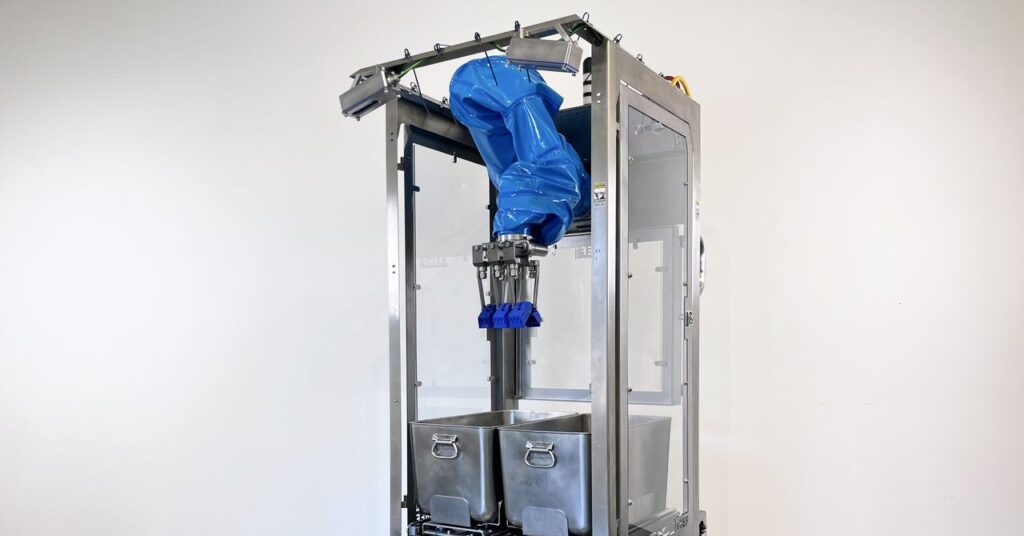
These AI chefs specializing in potato salad aren’t here to take jobs from anyone—not yet, at least. They’re simply volunteering their time.
Founded in 1985 by local grandmother and HIV-awareness advocate Ruth Brinker, Project Open Hand is a nonprofit dedicated to preparing and packaging meals that cater to the diverse nutritional needs of those in need. The initiative started in response to the AIDS crisis, but has since broadened its offerings to include meals for individuals dealing with conditions like heart disease, diabetes, and chronic kidney disease.
Creating these meals requires numerous volunteers, and Project Open Hand has faced challenges in attracting help to assemble the meal kits. The organization operates out of a four-story building in San Francisco’s Tenderloin area. During busy hours, the atmosphere is lively, filled with a mix of people: some there to receive free meals, and others—staff and volunteers—working to prepare food and manage the operations.
The assembly of medically tailored meal boxes can be intricate. Various patients have unique needs, meaning that donated meals cannot be generic; they must consider allergies and nutritional requirements based on medical conditions. This is where the robots come into play.
“It’s not about speed,” explains Alma Caceres, a sous chef involved in the meal preparation at Project Open Hand. “It’s about the lack of volunteers.”
Chef Robotics, a San Francisco-based company, produces “physical AI for the food industry.” It’s among the many firms looking to develop robots that can handle physical tasks more efficiently. Chef’s automated robots specifically focus on plating—no cooking or chopping—merely the process of getting food onto plates in bulk. They have partnerships with clients like Amy’s Kitchen and Factor, the frozen-meal provider. Chef Robotics is also advancing its robots’ capabilities to eventually tackle more complex activities, such as assembling hamburgers piece by piece.
The collaboration with Open Hand arose from an unexpected conversation between employees from both organizations on the Bay Area Rapid Transit. When approached with the concept, Project Open Hand’s CEO, Paul Hepfer, decided that the cost of employing the robots was justified. (Indeed, they incur a subscription fee.)
“Nonprofits often adopt a scarcity mindset, which can be a disservice to the communities we serve, as it prevents us from seeking innovations or quality enhancements,” Hepfer remarks to WIRED. “I would wager there isn’t an abundance of robots, AI, or innovation in the Tenderloin.”

Rajat Sharma
https://in.linkedin.com/in/rajat-mediaHelping D2C Brands Scale with AI-Powered Marketing & Automation 🚀 | $15M+ in Client Revenue | Meta Ads Expert | D2C Performance Marketing Consultant