Google Simplifies the Process of Creating Your Own Deepfake
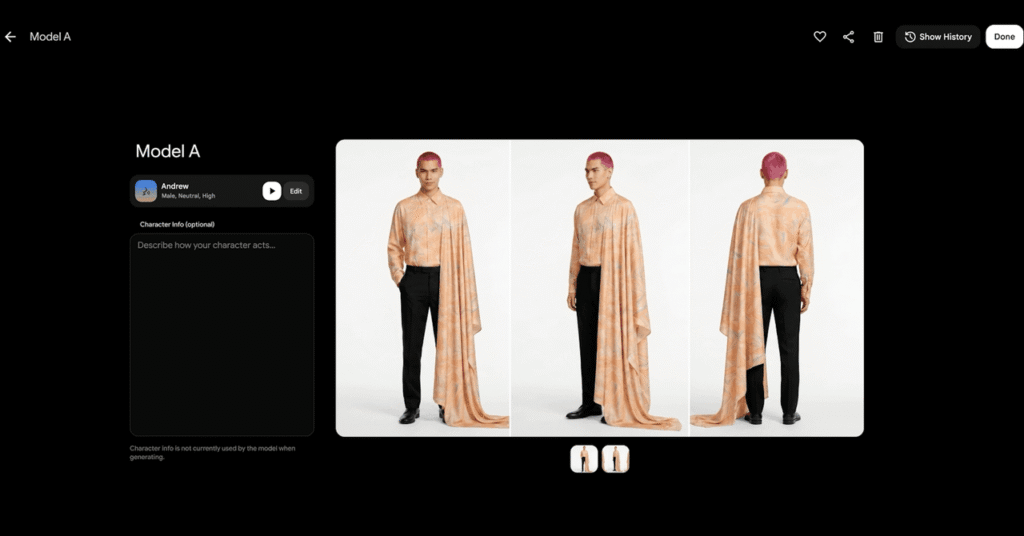
One of the most striking updates to Flow is the introduction of the new video-generation model, Omni Flash, which replaces Veo. Much like Google’s Nano Banana model enhanced AI image creation by adding context, the Omni Flash model revolutionizes video generation by offering greater detail throughout the clips.
With the Omni Flash model, Flow users can generate characters in AI videos with improved consistency. Roman highlights that this is a significant enhancement compared to previous versions of Flow, where characters could distort during consecutive video generations. Now, a standout feature is that Flow users can generate an AI version of themselves in the videos.
To establish their “avatar,” users simply go to the settings of their Flow account and scan a QR code using their phone. Google then prompts users to record themselves stating a series of numbers aloud and to move their heads to capture various angles. This selfie-capture method will seem familiar to anyone who used the Sora app, launched by OpenAI last year as an AI-driven social media platform for generating and sharing personal clips. OpenAI surprisingly discontinued it after less than seven months.
In contrast to the Sora app, where users could generate videos featuring others based on their settings, Google initially focuses on allowing users to create AI versions of themselves only. Any video produced with the Omni model, including those featuring an avatar, will include a SynthID watermark from Google.
“You can capture your voice and your visual identity from multiple angles with high fidelity,” says Roman. He created a humorous video of himself playfully mocking the Flow team in front of a dumpster fire, using a lifelike AI version of himself that also sounded like him. Then he utilized Flow to request modifications to the generation, such as a different background and a new shirt color, while Omni Flash preserved the avatar’s characteristics.
This isn’t Google’s first foray into self-controlled deepfake video tools; last month, YouTube Shorts introduced a limited feature allowing users to create similar AI avatars for use in their clips. Other Silicon Valley companies are also exploring methods to enhance creators’ outputs through generative AI. For instance, Meta launched an AI feature last year that can seamlessly translate Instagram Reels into various languages, even synchronizing the creators’ lip movements with different voices.
While these AI tools may simplify certain aspects of video production for creators—allowing them to generate engaging vertical videos without leaving bed—generative AI is becoming increasingly divisive among audiences, who may view such videos as inauthentic or misaligned with their values. Of course, this is contingent on whether they recognize the videos as AI-generated.

Rajat Sharma
https://in.linkedin.com/in/rajat-mediaHelping D2C Brands Scale with AI-Powered Marketing & Automation 🚀 | $15M+ in Client Revenue | Meta Ads Expert | D2C Performance Marketing Consultant