Elon Musk Claims He Founded OpenAI to Avoid a ‘Terminator Scenario’
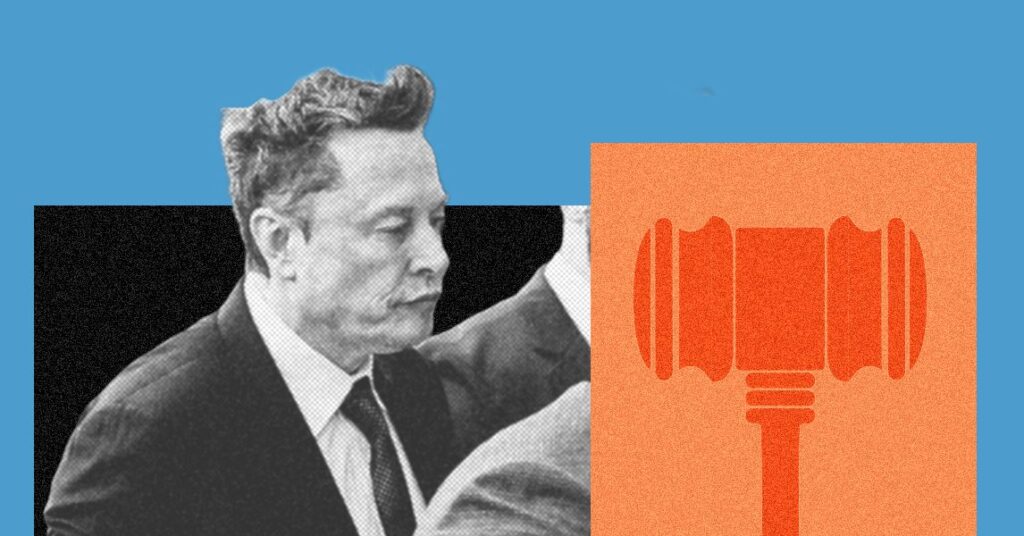
Elon Musk and Sam Altman made their first joint appearance in a federal courtroom on Tuesday as they contest the evolution of OpenAI over the past decade and its implications for the company’s future.
Musk’s lawsuit against Altman could lead to financial repercussions and, more critically, governance shifts at OpenAI that may complicate plans for an initial public offering as early as this year.
On the witness stand, Musk quickly aimed to position his argument as extending beyond just OpenAI. He claimed that siding with Altman would “authorize the exploitation of every charity in America” and undermine the “entire framework of charitable contributions,” addressing a jury of nine jurors advising US District Judge Yvonne Gonzalez Rogers.
Musk has been worried about the potential for computers to surpass human intelligence since his college years, his attorney Steven Molo informed the jurors. Molo noted that Musk had actively advocated for government regulations regarding the risks associated with artificial general intelligence, including a meeting with then-President Barack Obama in 2015. “But the government wasn’t responding,” Molo stated. “Elon felt compelled to take action.”
Around the same period, Musk connected with Altman, a then-30-year-old investor he “didn’t know very well,” according to Molo. Together, they co-founded OpenAI as a nonprofit. Their concerns over Google’s unchecked advancements in AI prompted them to create a lab with a heightened focus on safety. “My view is [OpenAI] exists because Larry Page labeled me a speciesist for being pro-humanity,” Musk remarked, referencing the Google co-founder. “What would be the antithesis of Google? An open-source nonprofit.”
While Musk envisions AI as a means to cure diseases and foster human prosperity, he also warned the court of its potential to plunge into disastrous scenarios reminiscent of science fiction. “It could also lead to our extinction … the Terminator scenario. I believe we want to experience a narrative akin to Star Trek, not a James Cameron film,” Musk expressed. (Despite his longstanding concerns about AI safety, Musk’s current venture, xAI, has faced criticism from researchers at other AI organizations for its “reckless” approach to safety.)
As OpenAI began achieving significant milestones, Musk and Altman agreed that establishing a for-profit division with fixed returns for investors was essential to secure the substantial funding required for hiring and infrastructure, according to Molo. He likened it to a nonprofit museum that benefits from sales at a for-profit store. “I wasn’t against having a small for-profit as long as the tail didn’t wag the dog,” Musk noted while testifying.
Musk felt the strategy had gone too far when Microsoft, another defendant in the trial, agreed to invest $10 billion in 2023, leading to a growing transfer of intellectual property and personnel to the for-profit entity. “The museum’s store sold the Picassos so they were stored away where no one could see them,” Molo explained.
OpenAI’s Response
William Savitt, representing OpenAI, stated to the jury that the organization never assured Musk it would remain a nonprofit or disclose all its code. “The evidence will demonstrate that Musk’s account of events is inaccurate,” Savitt asserted.
He further emphasized that Musk was aware of plans to raise corporate funding exceeding $10 billion as early as 2018. Musk even raised alarms about Microsoft’s involvement in a tweet from 2020. However, he did not initiate legal action until he established a competing entity, xAI, in 2023.

Rajat Sharma
https://in.linkedin.com/in/rajat-mediaHelping D2C Brands Scale with AI-Powered Marketing & Automation 🚀 | $15M+ in Client Revenue | Meta Ads Expert | D2C Performance Marketing Consultant