The Struggle for the Essence of OpenAI
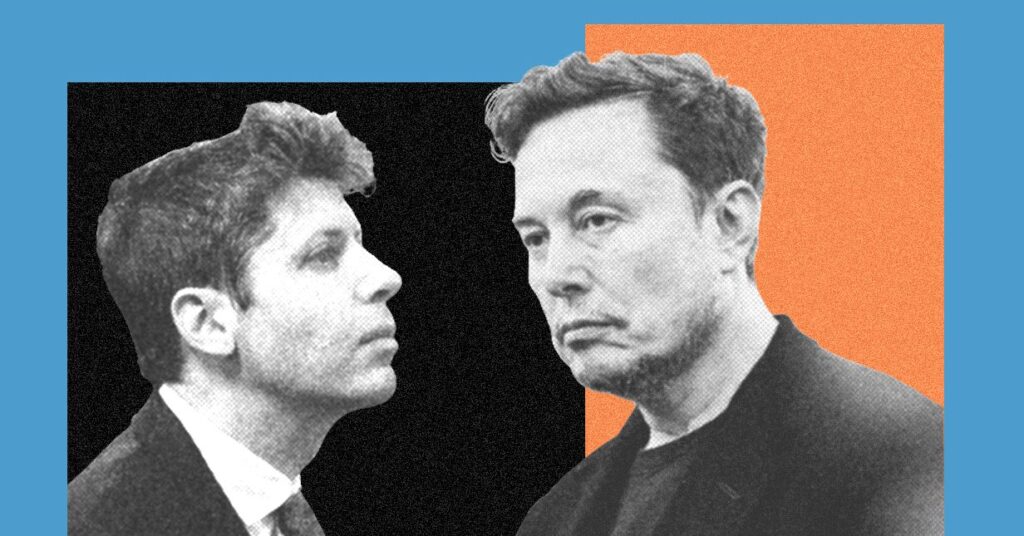
Elon Musk’s lawsuit against Sam Altman is set to go to trial this month in a federal courtroom in Oakland, California, where a jury of nine will resolve a lengthy dispute between the cofounders of OpenAI regarding the organization’s founding mission. While disputes among Silicon Valley’s most prominent billionaires attract attention, former OpenAI employees and nonprofits are particularly invested in this case, as the outcome may shape how the leading AI developer manages and distributes its technology.
The implications for OpenAI’s corporate future are significant, as an unfavorable verdict could hinder its plans for an IPO later this year. The company, known for ChatGPT, is vying to go public alongside competitors like Anthropic and Musk’s SpaceX, which now operates a rival AI lab, xAI. Musk, as a competitor, could gain considerably if he prevails in court, raising questions about whether he’s the appropriate figure to present this case to a jury. Nonetheless, an out-of-court settlement remains a possibility, though legal experts and insiders suggest it’s unlikely.
Here’s everything you need to know about Musk v. Altman.
What Is This Case?
Musk’s lawsuit essentially claims that OpenAI has deviated from its original nonprofit mission: ensuring that AGI, a highly advanced AI system capable of performing various tasks, is beneficial to humanity. The defendants include OpenAI, Altman, OpenAI President and cofounder Greg Brockman, and Microsoft, OpenAI’s largest investor.
Despite generating substantial revenue, OpenAI continues to operate under a nonprofit structure. Musk, a founding co-chair of the OpenAI nonprofit, contributed approximately $38 million in its early stages but distanced himself in 2018 following disagreements with Altman and Brockman. Musk’s lawsuit has since been narrowed down to three main allegations against OpenAI.
The first allegation pertains to whether OpenAI violated its charitable trust. Musk argues that during OpenAI’s inception, he believed he was investing in a nonprofit committed to open-source principles, making its AI technology widely accessible. However, he claims that Altman and Brockman have not aligned with his intended use of the investment. Currently, OpenAI operates a for-profit segment generating billions annually while being secretive about its premier AI models’ code. (OpenAI contends that Musk was informed in 2017 of the need for a for-profit division and even assisted in establishing the corporate structure.)
The second principal allegation is fraud, specifically claiming that Altman and Brockman misled Musk regarding their plans to convert OpenAI into a for-profit entity. The third claim is unjust enrichment, which posits that Altman, Brockman, Microsoft, and other OpenAI investors have benefited at Musk’s expense.
The defendants argue that Musk’s claims lack merit and that he is merely trying to undermine OpenAI while developing xAI.
Musk seeks several remedies, including the removal of Altman and Brockman from their positions at OpenAI, restitution of the “ill-gotten gains” to the nonprofit, and preventing OpenAI from operating as a public benefit corporation, the current classification of its for-profit arm.
When contacted for comment, an OpenAI spokesperson referred WIRED to a blog post stating, “Motivated by jealousy, regret for leaving OpenAI, and a desire to sabotage a competing AI firm, Elon has spent years targeting OpenAI through unfounded lawsuits and public criticisms.” Musk’s legal team did not respond to multiple inquiries for comment.
Why Should I Care?
Former OpenAI researchers and AI safety nonprofits that have submitted amicus briefs supporting Musk express the belief that it’s crucial for the ChatGPT developer to adhere to its founding principles of safety and benefiting humanity, particularly in light of increasing commercial pressures.
Jacob Hilton, part of a group of former OpenAI employees who signed an amicus brief specifically challenging OpenAI’s transformation into a for-profit entity, states, “It’s definitely important that OpenAI lives up to its mission. I think we’re still witnessing actions from OpenAI that, in my opinion, aren’t fully consistent with its mission. A recent example that people are discussing is the support for an Illinois state bill that would protect them from liability,” Hilton remarks.

Rajat Sharma
https://in.linkedin.com/in/rajat-mediaHelping D2C Brands Scale with AI-Powered Marketing & Automation 🚀 | $15M+ in Client Revenue | Meta Ads Expert | D2C Performance Marketing Consultant