Arm’s CEO Claims Demand for His New CPU is Essential, but It Might Frustrate Many.
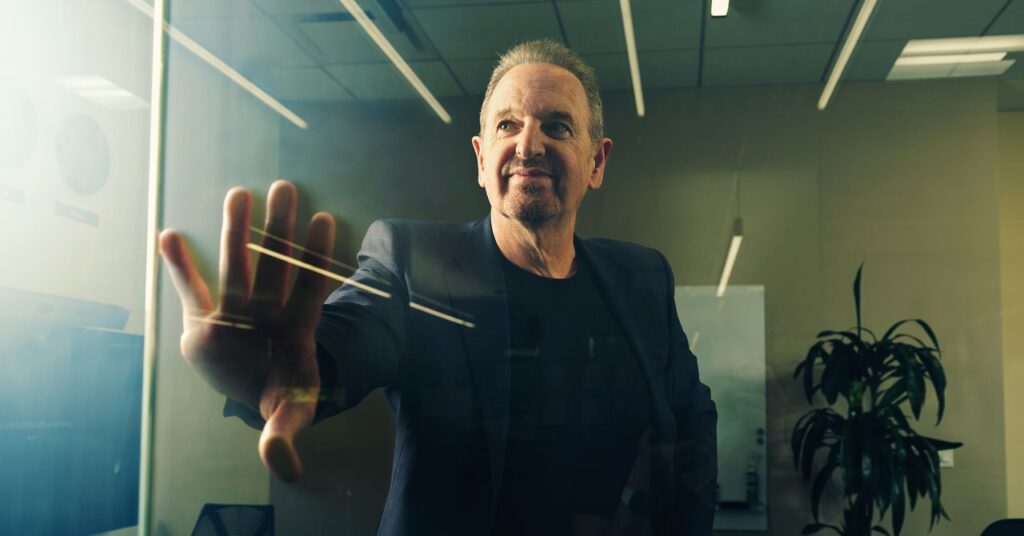
Rene Haas is reclined on a couch in his office in San Jose, California, holding a basketball that partially obscures his face. When WIRED’s photographer initially requested this pose, Haas grimaced, quickly recognizing the potential headlines: “People will say ‘Arm’s CEO sleeps on the job,’” he comments.
Yet, Haas complies, giving us 46 minutes before hastily dismissing us to take a call with Masayoshi Son, the CEO of Softbank and chairman of Arm’s board.
I’m sitting down with Haas just days ahead of a significant announcement from the chip firm regarding its venture into producing its own silicon. This strategic shift is monumental for a company that has earned its fortune by licensing its architectures to other chip makers without manufacturing its products. Giants like Apple, Tesla, Nvidia, Microsoft, Amazon, Samsung, and Qualcomm either manufacture or sell chips based on Arm designs, either through licensing or royalty payments. Estimates suggest there are three Arm chips for every person on Earth.
However, this venture into chip production is a return to Arm’s origins. Founded in the late 1970s by two computer architects who created Acorn Computers, the company initially developed a microprocessor built on the RISC architecture. By the early 1990s, it faced challenges, prompting a CEO to pivot towards licensing designs to other companies. Fast-forward to the mid-2010s, when Arm’s energy-efficient mobile chip designs established it as the leading chip IP firm globally.
Arm hasn’t navigated this journey without turbulence. Following Softbank’s acquisition in 2016 and the transition of the public company to private ownership, the smartphone market began to slow down. Arm was compelled to aggressively pursue new business avenues. In 2020, an attempted acquisition by Nvidia was thwarted by regulators. As that deal fell apart, Haas took on the CEO role in 2022, reinstating Arm as a public entity while Softbank retained 90 percent ownership.
Haas joined Arm in 2013 from Nvidia, where he had led the computing product division and eventually managed Arm’s lucrative IP products group. Just as Nvidia CEO Jensen Huang draws upon his extensive industry experience—inviting the audience to listen to tales from the early days of parallel computing—Haas easily recalls the geopolitical turbulence of the 1980s when asked about any concerns regarding current events affecting his business. (He isn’t worried.) He notes he’s had multiple meetings with President Donald Trump but isn’t particularly anxious about the US government intervening in the affairs of his UK-based company. Tall but not intimidating, he often sports Saint Laurent boots with modest heels, a blazer, and a Panerai watch.
Chip industry insiders describe Haas, 63, as a highly skilled networker, frequently seen alongside the biggest names in tech. The Wall Street Journal has even referred to him as a “natural-born diplomat.” However, with this new chip initiative, one of Silicon Valley’s worst-kept secrets, both Arm and Haas risk upsetting some of their most loyal partners. Can one maintain close relationships with their peers after announcing a major shift, akin to saying you’re purchasing their home after years of friendly interactions? Haas seems confident that he can manage it.
This interview has been condensed and lightly edited for clarity.
Lauren Goode: Since assuming the role of CEO, there are claims of a significant cultural shift. Do you believe that’s accurate?
Rene Haas: One key lesson I’ve gathered—something I understood to some extent when I worked under Jensen, but fully realized upon taking this position—is that the CEO sets the company’s tone.
My development as a leader has been accelerated by my 30 years in Silicon Valley, starting with a few startups and culminating in my time at Nvidia. A common thread among those experiences has been the opportunity to work alongside founders. At the time, I couldn’t fully articulate the significance of this environment on my preferences, but looking back, I recognize that it fundamentally shaped my professional identity and provided a setting where I truly thrive.

Rajat Sharma
https://in.linkedin.com/in/rajat-mediaHelping D2C Brands Scale with AI-Powered Marketing & Automation 🚀 | $15M+ in Client Revenue | Meta Ads Expert | D2C Performance Marketing Consultant