Gamers Dislike Nvidia’s DLSS 5, and Developers Share Their Concerns Too
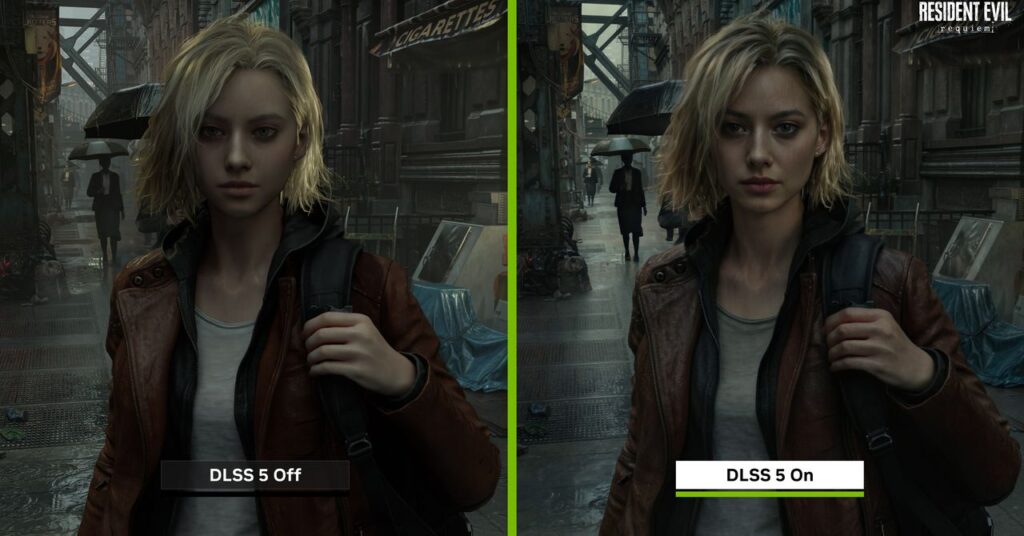
Following significant backlash, Nvidia CEO Jensen Huang staunchly defended DLSS, stating that gamers are “completely wrong” about it. (Gamers aren’t usually fond of being told they’re mistaken.) Meanwhile, developers from Capcom and Ubisoft expressed that they were unaware of the tech demo’s appearance, learning about it at the same time as the general public and sharing in their surprise. (Nvidia, Ubisoft, and Capcom did not respond promptly to our request for comment.)
“The gamers’ reaction is understandable,” remarked Marwan Mahmoud, a developer at Incrypt, in an email to WIRED. “Some titles have relied too heavily on this technology instead of prioritizing proper optimization. From a developer’s viewpoint, DLSS is perceived as a helpful tool rather than a fundamental solution.”
The issue for many, including developers, lies in a universal approach that aims to adapt visuals across diverse game genres.
“Every artist has their unique style and artistic direction, which AI often fails to honor,” commented Raúl Izquierdo, an indie game developer from Mexico. “Perhaps I don’t want my characters to be overly stylized.”
Bates concurs, believing not every game necessitates hyper-realism. This view is shared by game developer Sterling Reames, who has experience at Striking Distance Studios and Zynga. “Players simply desire better games,” Reames conveyed in a message to WIRED. “That’s as straightforward as I can express it.”
During GTC, Nvidia showcased its demo using its most potent consumer graphics cards, two GeForce RTX 5090s. Had Nvidia positioned the tech as a resource-saving feature, allowing older hardware to achieve better graphics, it might have garnered more approval.
“What’s the purpose if it’s not compatible with lower-end hardware?” Izquierdo questions. “If this demo had been run on an [RTX 2080 graphics card], for example, my perspective might be different. This should enhance gamers’ experiences, not just promote graphic cards.”
Ultimately, Nvidia’s demonstration, along with GTC, showcased the company’s dominance in the AI arena. Bates suggests that the public’s reaction reflects a struggle not only with crossing the uncanny valley but also contemplating the implications once we’ve reached the other side.
“At this point, it’s evident this is a necessary move to highlight their strength as an AI entity,” Bates states. “However, in a few years, this will become the standard, and people won’t give it a second thought. It’s Jensen’s world, and we’re merely participants.”

Rajat Sharma
https://in.linkedin.com/in/rajat-mediaHelping D2C Brands Scale with AI-Powered Marketing & Automation 🚀 | $15M+ in Client Revenue | Meta Ads Expert | D2C Performance Marketing Consultant