This Humanoid Is Set to Deliver a Toothbrush to You
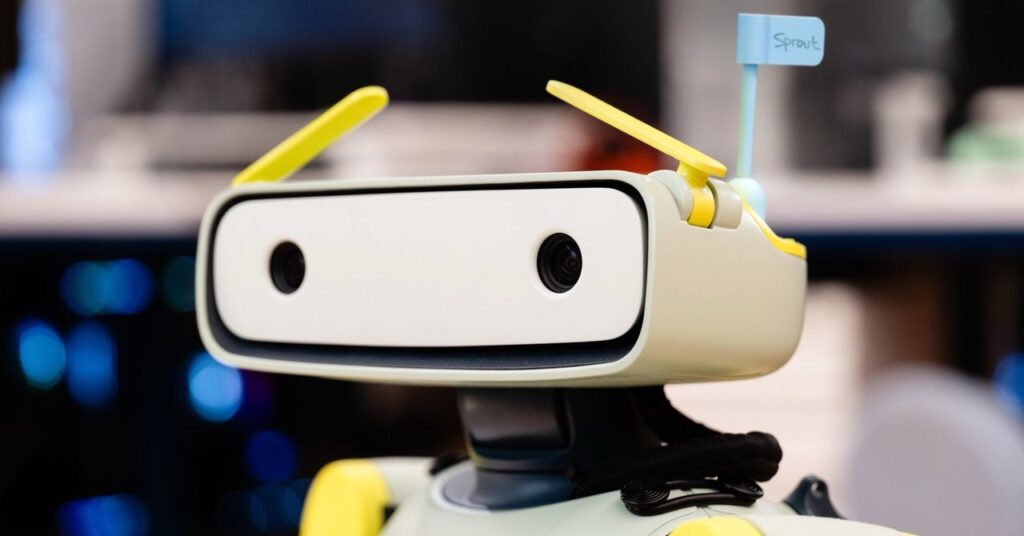
Meet Sprout, the latest humanoid robot making waves. Unlike traditional models that carry boxes or stack shelves, this charming and budget-friendly robot, about the height of a 9-year-old, is designed to assist customers in hotels, shops, and restaurants.
“We wondered, ‘What if we created something lightweight, engaging, and safe to interact with, yet able to perform fascinating tasks?’” says Robert Cochran, co-founder and CEO of Fauna, the startup behind Sprout.
Sprout is now available for purchase starting at $50,000. Cochran mentions that his company is in discussions with hotels about using Sprout as a butler to deliver toothbrushes and other necessities to guests.
The launch of Sprout is part of a burgeoning industry in the United States. Humanoid robotics is thriving, despite uncertainty about their practicality and effectiveness. Numerous US companies are developing humanoids, including Boston Dynamics, which recently collaborated with Google on AI for its robots; Tesla, which is working on a system named Optimus; and startups like Agility Robotics, Figure AI, and 1X.
Unitree, a Chinese manufacturer, is also successful in selling cost-effective humanoids for entertainment and research. While some Unitree models are priced below $20,000, fully equipped versions can match the price of Sprout.
Among Fauna’s initial customers is Disney, which already incorporates robots in its theme parks, and Boston Dynamics, known for its range of legged robots designed for industrial applications, including larger and more robust humanoids.

Courtesy of Fauna

Courtesy of Fauna
Cochran explains that Sprout is designed for easy programming, making it particularly advantageous in research environments. It comes equipped with software libraries allowing it to scan its surroundings, move autonomously, access language models, and more. Additionally, the robot can be controlled remotely right from the start, which proves beneficial for training purposes. Researchers at New York University are utilizing Sprout to explore new methods for robotic manipulation and human-robot interaction. The company has also incorporated proprietary technology to assist Sprout in regaining its balance if it were to stumble.
While many humanoid robots are marketed for factory tasks, with some already undergoing trials by automakers, Cochran argues that the primary market for robots may lie in the service and entertainment sectors.
Cochran showcased a range of interfaces for Sprout during the demonstration, including an app that captures the robot’s visual perspective and a coding platform for real-time programming. Unlike most humanoids, Sprout is intentionally designed for human interaction, featuring mechanical eyebrows to convey emotions such as interest, surprise, or confusion.
Having previously worked at Meta, Cochran underscores that AI systems capable of recognizing objects—similar to those being developed for smart glasses—will also benefit robots engaged in navigating human environments.
At one point in the demo, Cochran prompted Sprout to investigate what was inside the fridge. The robot processed the command using a language model and approached a corner of the office, mimicking the gait of an inquisitive 9-year-old. After peering through the appliance’s glass door, Sprout returned with a report on the availability of several sodas.
Cochran believes that such functionality could pave the way for humanoids. “It offers a sort of ‘Hello World’ scenario for a robot that can autonomously understand and navigate its environment,” he remarks. “From that point forward, the possibilities are endless.”

Rajat Sharma
https://in.linkedin.com/in/rajat-mediaHelping D2C Brands Scale with AI-Powered Marketing & Automation 🚀 | $15M+ in Client Revenue | Meta Ads Expert | D2C Performance Marketing Consultant