Your Initial Humanoid Robot Colleague Is Likely to Be Chinese
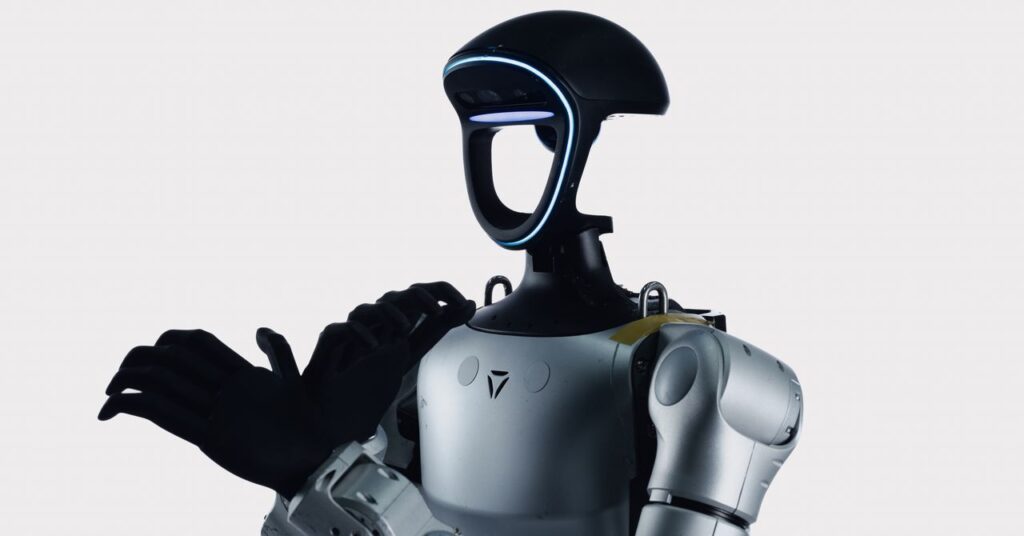
However, language models have their limitations, and what robots urgently require is a novel model that comprehends the physical world similarly to how an LLM interprets text. To develop this model, engineers need significantly more data. While exploring BAAI, I observe numerous workers at their desks, remotely operating various robotic arms and grippers to teach algorithms basic manipulation tasks like sweeping beans from a table, pouring liquids into different cups, and retrieving items from shelves. A young man in a virtual reality headset seems to be preparing tea while a camera captures his every movement. The goal is that with sufficient training data, robots will intuitively learn to perform a wide range of tasks without specific training.
The challenge lies in the uncertainty of what data is most beneficial for the robots, as well as how much is needed and the optimal methods for collecting it. Additionally, for humanoid robots to become commonplace, there is a need for hardware that more accurately replicates a human hand. For robots, executing a backflip is significantly easier than flipping a coin.
Still, Tony Zhao, co-founder and CEO of Sunday Robotics, a startup based in California, expresses concern that companies like his are at a disadvantage compared to Chinese firms, which can deploy more workers, like BAAI’s teleoperators, to train robotic models and swiftly introduce new hardware. “The iteration speed, the US is losing there,” he remarks. “And honestly, I don’t know how we can win.”
To keep pace, Zhao has recently brought on board an executive from a Chinese robotics company who has extensive connections and experience utilizing China’s vast and intricate supply chain. “The only way we can beat Chinese companies is to build a China team,” he asserts.
Some CEOs in the US, including Demis Hassabis of Google DeepMind and Lachy Groom of Physical Intelligence, both of whom are pursuing the robo-ChatGPT moment, have indicated that they envision robotics development somewhat paralleling that of smartphones, where China produces the hardware and the US focuses on the intelligence. (Except that Huawei is now involved in both areas.)
Jonathan Hurst, co-founder and chief robot officer of Agility, which manufactures humanoids, suggests that government involvement may be necessary. He envisions significant investment in advanced domestic manufacturing, including tax incentives for companies that employ robots in their warehouses and factories, as a means to bolster local robotics firms. Such a strategy could begin to replicate the Chinese government’s patient capital investments in its industries. “We have to be very smart about automation,” he states. “It is the only way.”
During my stay at a hotel in Beijing, located in the high-tech district of Zhongguancun, there were no wheeled robots delivering items to guests’ rooms as seen in some major city hotels. Instead, my needs were attended to by an unfailingly polite human named Stephen. When I asked for a shirt to be cleaned, Stephen ensured it was done within just a few hours. As I flew home at the end of my trip, I contemplated the many hands that had washed, pressed, packaged, and swiftly transported the garment. Even in China, robots have not yet taken over.
What Say You?
We welcome your thoughts on this article in the comments below. Alternatively, you can send a letter to the editor at mail@wired.com.

Rajat Sharma
https://in.linkedin.com/in/rajat-mediaHelping D2C Brands Scale with AI-Powered Marketing & Automation 🚀 | $15M+ in Client Revenue | Meta Ads Expert | D2C Performance Marketing Consultant