Trump Issues Executive Order Aimed at Penalizing States Enacting AI Legislation
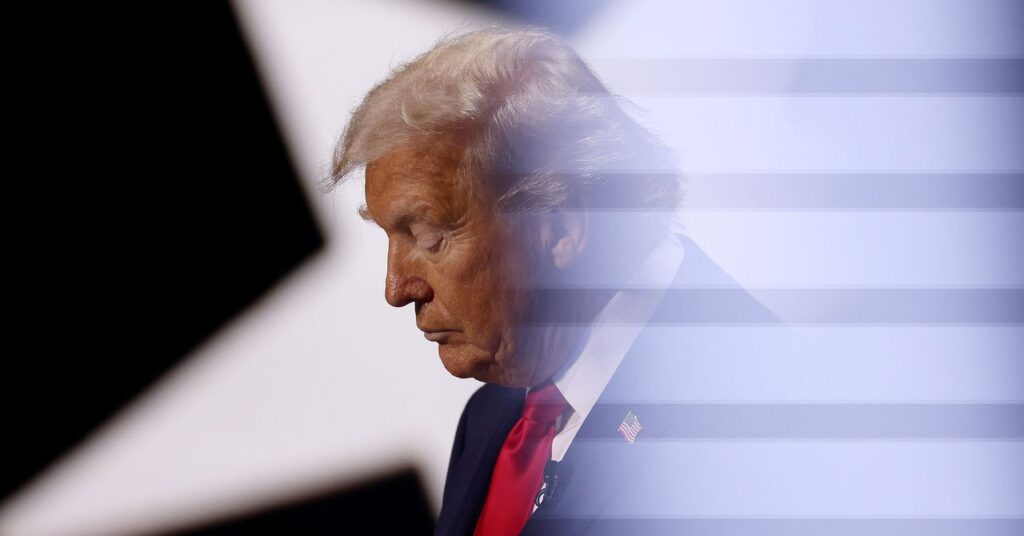
President Donald Trump signed an eagerly awaited executive order on Thursday that initiates a plan to create a national regulatory framework for artificial intelligence, while limiting states’ abilities to implement their own regulations.
The order, named “Ensuring a National Policy Framework for Artificial Intelligence,” establishes an AI litigation task force within the Justice Department to directly contest state AI laws that the administration perceives as conflicting with federal policy. It also mandates the Department of Commerce to develop guidelines that could render states ineligible for future broadband funding if they enact “onerous” AI regulations.
The drive for extensive federal preemption of state AI regulations has been primarily motivated by AI investors, conservative think tanks, and technology industry trade associations. These entities contend that a fragmented approach to AI regulation could hinder Silicon Valley’s AI growth and diminish America’s global competitiveness. White House AI and crypto advisor David Sacks has been a leading advocate for a less stringent approach to AI regulation.
“The EO provides your administration with the tools to counteract the most burdensome and excessive state regulations,” Sacks informed Trump during Thursday’s signing event. “We won’t oppose all of them. For instance, when it comes to children’s safety, we’ll ensure protection.”
The order bears resemblance to a previous draft obtained by WIRED, though with some notable changes. It tasks Sacks and the assistant to the President for science and technology, Michael Kratsios, with drafting a legislative proposal to create a federal policy framework for AI. One significant addition is a provision within this legislative proposal requesting Congress not to preempt state AI laws meant to safeguard children, enhance data center infrastructure, and encourage state governments to acquire AI tools.
“We aim for one centralized source of approval, and we have strong Republican backing. I believe we likely have support from Democrats as well, as it’s common sense,” Trump stated during Thursday’s signing ceremony. “Anytime you implement a change, even if it’s a reasonable one, it won’t receive approval if you have to navigate through 50 states. This centralizes the process.”
In the absence of federal guidelines, officials from various states have initiated their own inquiries and legislation to regulate AI use and development. Trump’s executive order specifically calls out certain state AI regulations—like Colorado’s SB24-205, which seeks to restrict “algorithmic discrimination” in AI models—as efforts to “embed ideological bias.”
Several other state AI laws may also be affected by this executive order. California Governor Gavin Newsom enacted a law in September mandating large tech firms to disclose safety frameworks related to their AI models. In June, New York’s legislature approved a bill that would enable the state’s attorney general to impose civil penalties of up to $30 million on AI developers who fail to comply with safety standards. This bill is currently awaiting action from New York Governor Kathy Hochul, who is reportedly contemplating amendments that could significantly dilute the legislation.

Rajat Sharma
https://in.linkedin.com/in/rajat-mediaHelping D2C Brands Scale with AI-Powered Marketing & Automation 🚀 | $15M+ in Client Revenue | Meta Ads Expert | D2C Performance Marketing Consultant